
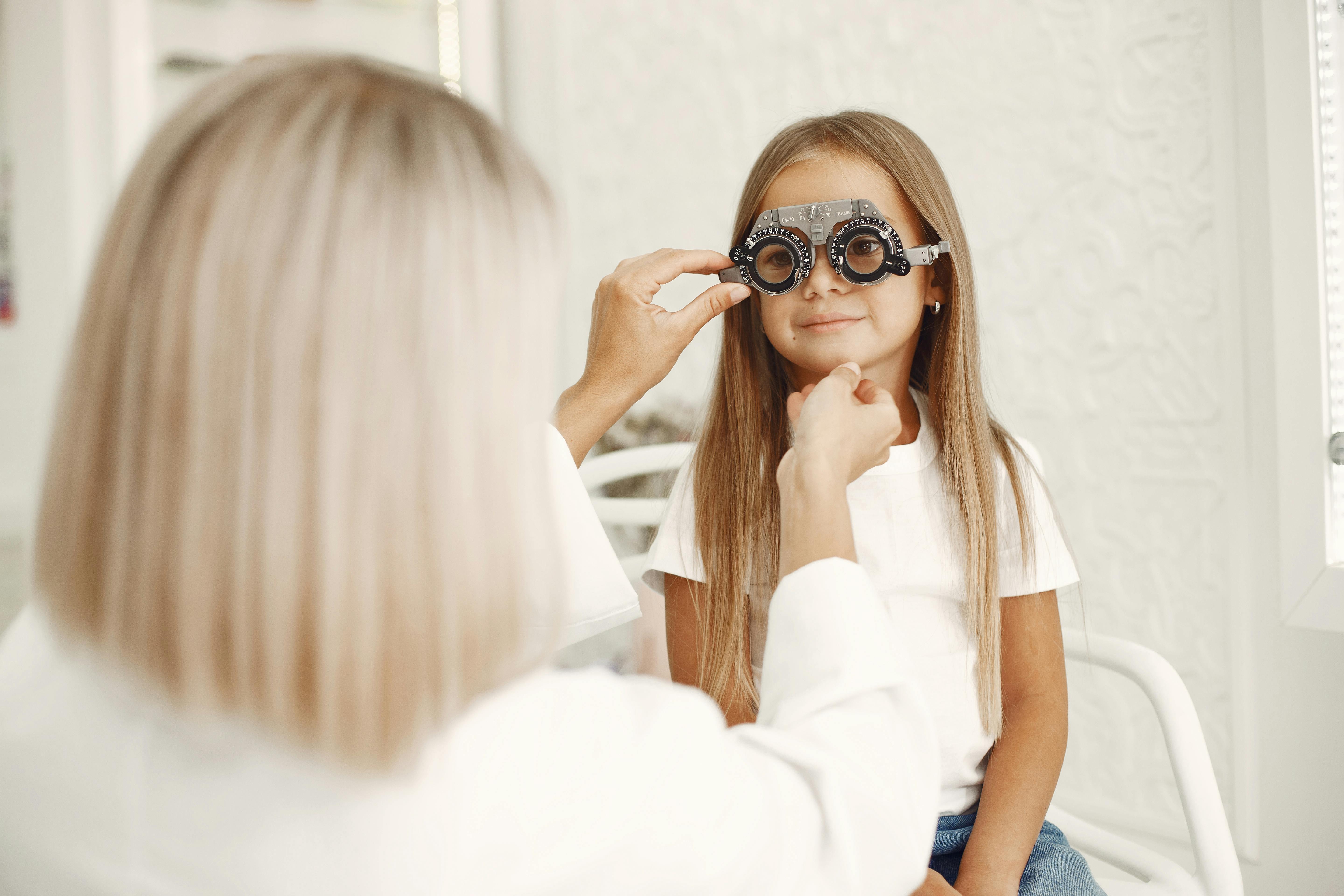
The following existing methods are only designed to prevent myopia from getting worse. However, there are risks involved. Misight lenses, for example, can be prescribed to children as young as 8 years old. The lenses must be worn 6 days a week for 10 hours a day until the patient becomes a teenager. The drawback is that they pose a risk for infection (Mukamal, 2020).
Orthokeratology, or ortho K, use hard contact lenses that are worn overnight to reshape the cornea. But when the child stops using the lenses, their cornea goes back to its original shape. The myopia would return. There is the risk of abrasion and keeping the lens clean. There is also the risk of an infection called microbial keratitis which can cause blindness (Mukamal, 2020).
Low doses of atropine can be helpful in curbing the progression of myopia without causing serious side effects. It needs to be applied everyday for years, otherwise, the myopia can come back. The risks are blurred vision, light sensitivity, enlarged pupils, and itchiness (Mukamal, 2020).
Multifocal contact lenses can also help slow myopia progression. These lenses are to be worn for at least 5 hours a day over a period of years. Like Misight lenses, they carry the risk of cornea infection (Mukamal, 2020).
Ortho C is a neurological process. The intention is not just to prevent myopia from getting worse but to correct the myopia. By comparison, John’s lenses are worn by children as early as 5 years old. They are initially worn for 2 minutes per treatment once every week. The goal is to wear it (for 2 minutes) once a month and eventually once every 3 to 6 months. The reduced wearing time and frequency reduces the risk of infection.
It is a natural process in the sense that the ortho C lenses only target the parts of the eye that deviated. It does not alter other parts of the eye not affected by myopia.
Reference
Mukamal, R. (2020). Four alternatives to eyeglasses for children with myopia. American Academy of Ophthalmology.
https://correctmyopia.com/about/


Leave a Reply